Introduction
This article provides a comprehensive comparison of sovereign cloud and public cloud models, helping IT decision-makers, compliance officers, and technology leaders choose the right solution for their organization’s needs. Understanding the differences between these cloud models is crucial for ensuring data security, regulatory compliance, and cost efficiency—especially for organizations operating in highly regulated industries.
Cloud computing has revolutionized how businesses and individuals manage their data. Instead of relying on traditional, physical storage systems, cloud computing allows organizations to access and store data over the internet, offering enhanced flexibility, scalability, and efficiency. This article compares sovereign cloud and public cloud models, helping you choose the right solution for your organization’s needs. However, not all cloud solutions are the same—organizations have various options to choose from based on their specific needs for control, security, and compliance.
Why Is It Important to Understand Cloud Models?
Choosing the right cloud model is critical because it directly impacts a company’s operational efficiency, data security, and long-term costs. For instance, while public clouds may offer low upfront costs and high scalability, private or on-premises solutions might provide the control and security needed for industries with strict data regulations. Data governance is a key consideration when selecting a cloud model, as it ensures compliance and proper management of data. Understanding these differences is essential to avoid unexpected costs or risks, especially when companies outgrow their initial cloud setup or realize it no longer meets their needs.
This is where cloud repatriation comes into play—the process of moving workloads from the public cloud back to on-premises infrastructure or a private cloud environment. Many organizations initially adopt public cloud solutions due to their convenience and scalability. However, over time, they may find that public cloud costs rise significantly as their usage grows, or they encounter security concerns or performance issues. Repatriation is often motivated by the need for greater organizational control over data and infrastructure. Repatriation allows companies to regain control and optimize costs by moving data back to more manageable or secure environments, such as a private cloud environment, to meet compliance and control requirements.
Now that you understand why cloud model selection is so important, let’s explore the main types of cloud computing environments and how they differ.
What Is Cloud Computing? Public Cloud vs. Private Cloud
Cloud computing has transformed the way organizations store, manage, and access data, with cloud services delivered by various cloud providers using advanced cloud technology. But not all clouds are created equal.
What is a Public Cloud?
Public cloud solutions, like Amazon Web Services (AWS), Microsoft Azure, and Google Cloud (leading cloud service providers), offer shared infrastructure where companies “rent” servers and services from large providers. The key benefits are scalability, flexibility, and reduced infrastructure management for users. However, public clouds may have limitations regarding data residency, which can impact compliance for organizations that require strict control over where their data is stored.
What is a Private Cloud?
Private cloud solutions involve dedicated infrastructure either hosted by a company or outsourced to a specialized provider. Unlike the public cloud, resources are not shared with other organizations, providing greater control and enhanced security, and private clouds often implement strict access controls. This model is favored by companies that need to comply with strict regulatory or data privacy requirements. Private clouds are also often chosen by organizations that need to protect critical data from unauthorized access.
What is a Sovereign Cloud?
Sovereign cloud explained: A sovereign cloud is a specialized cloud solution designed to comply with data sovereignty laws and regulatory requirements, ensuring organizations maintain control over their digital assets and data within specific legal jurisdictions.
Data sovereignty is the concept that digital data is subject to the laws and governance of the country where it is collected, stored, or processed.
A sovereign cloud is a cloud computing environment that helps organizations comply with the laws of specific regions and countries.
A sovereign cloud environment is architected to meet cloud sovereignty and data sovereignty requirements by enforcing compliance with local regulations, data residency mandates, and operational sovereignty. This means digital data, including customer data, financial data, and intellectual property, is stored, processed, and managed within national borders, ensuring that data remains under the control of the organization and is protected from foreign access. Sovereign cloud deployments utilize strict access control and data access policies to protect sensitive data, ensuring data confidentiality and compliance with strict regulations. Encryption keys, disaster recovery solutions, and dedicated communications links are critical components for maintaining secure data, operational sovereignty, and business continuity in sovereign cloud environments.
Sovereign clouds help organizations maintain digital sovereignty and comply with digital sovereignty requirements, particularly in the context of the CLOUD Act and national security concerns. Key factors in selecting a sovereign cloud provider include support for distributed cloud deployment model, modern cloud capabilities, and robust measures to protect intellectual property and digital data. While sovereign clouds may present challenges for data sharing and interoperability, they ensure that data remains within legal boundaries, supporting data residency and limiting unauthorized or foreign data access.
Sovereign clouds are essential for highly regulated industries, such as government, healthcare, and financial services, where the protection of critical data and compliance with data sovereignty requirements are paramount.
What is an On-Premises Data Center?
On-premises solutions refer to infrastructure physically located and maintained within a company’s own facilities. This setup provides the highest level of control, security, and customization but requires substantial upfront investment and ongoing maintenance. It’s ideal for organizations that need full control over their IT infrastructure, data, and security policies.
The Hybrid Approach
Some businesses adopt a hybrid model, combining the flexibility of the public cloud with the control of private infrastructure. This approach helps organizations balance cost and security while optimizing performance.
For more insights, check out A Crucial Choice of Email Servers: Cloud-based vs. On-premises
Analogy: Renting vs. Owning
Think of the public cloud like renting a car. It’s convenient, you don’t need to worry about maintenance, but as you use it more, costs can add up. Private cloud and on-premise systems are like owning a car—higher initial investment, but you gain full control and long-term savings.
To learn more about the roots of cloud computing and its impact on data privacy, check out Roots of Cloud Computing and Data Privacy Concerns
Quick Comparison Table of Cloud Types
Cloud Type | Key Features |
|---|---|
Public Cloud | Shared infrastructure, pay-as-you-go, high scalability, lower upfront costs |
Private Cloud | Dedicated infrastructure, enhanced security, strict access controls, higher customization |
Sovereign Cloud | Compliance with local laws, data residency, operational sovereignty, ideal for regulated data |
On-Premises | Full control, highest security, substantial investment, on-site management |
Hybrid Approach | Combines public and private, balances cost and control, flexible deployment |
Now that we’ve explored the main types of cloud models, let’s examine how data protection and security considerations influence your choice.
Sovereign Cloud vs Public Cloud: Key Differences
When comparing sovereign cloud and public cloud, several key differences stand out:
- Cost Structure: Public clouds have lower, pay-as-you-go costs and provide greater flexibility for rapid, fluctuating workloads compared to sovereign clouds. Public cloud generally offers lower upfront costs compared to sovereign cloud. Public clouds offer economies of scale that result in lowered operational costs.
- Sovereign Cloud Premium: Sovereign cloud often incurs higher costs due to smaller scale and local infrastructure requirements compared to public clouds. Sovereign cloud typically carries a 10% to 30% price premium due to costs associated with isolated infrastructure.
- Legal and Regulatory Compliance: Public cloud can be subject to foreign legal demands like the US CLOUD Act, which may expose data to foreign jurisdictions. Sovereign cloud is ideal for government and regulated data, and is essential for highly regulated industries such as government, healthcare, defense, and finance.
- Use Case Suitability: Public cloud is best for organizations seeking cost efficiency and flexibility for non-sensitive workloads. Sovereign cloud is designed for organizations that require strict data residency, compliance, and protection from foreign access.
Understanding these differences is crucial for making an informed decision about which cloud model best fits your organization’s operational, security, and compliance needs.
Next, let’s dive deeper into how data protection and security play a role in your cloud strategy.
Data Protection and Security: What You Need to Know
Sovereign Cloud Security Advantages
Picture this: you’re navigating today’s complex digital landscape where data protection and security are absolutely crucial for your organization’s cloud strategy—especially if you’re operating in highly regulated industries. With data flows becoming increasingly complex and the growing threat of breaches, choosing the right cloud solution has become more critical than you might imagine.
Sovereign cloud solutions offer robust safeguards for your sensitive data with a range of advantages that regular cloud providers simply can’t match:
- All your data is stored, processed, and managed strictly within your specific country’s borders, adhering to local laws and regulations.
- This approach guarantees data sovereignty, meaning your organization retains full control over where your data resides and who can access it.
- Enhanced protection against unauthorized foreign access and compliance with national security requirements.
Compliance in Regulated Industries
For sectors like finance, healthcare, and government, where regulatory compliance is non-negotiable, sovereign cloud environments provide the enhanced security and data protection you need to meet those strict legal standards. By aligning with national data protection laws and industry-specific regulations, sovereign cloud solutions help your organization avoid costly data breaches and ensure that your sensitive information remains secure at all times.
- The savings from avoiding just one major breach can be more than the investment in proper sovereign cloud infrastructure.
- Sovereign cloud is becoming the preferred choice for organizations that cannot compromise on data sovereignty and security.
Ultimately, partnering with a sovereign cloud provider empowers your organization to confidently manage your digital infrastructure, knowing that your data is protected by the highest standards of security and regulatory compliance. The peace of mind alone makes it worth every penny.
With a clear understanding of security and compliance, let’s look ahead to the future of cloud computing and your available options.
The Future of Cloud Computing: What Are Your Options?
Our focus today isn’t solely on reverting to on-premises solutions—although some statistics suggest that—but on adopting the right mix of cloud options that align with evolving needs.
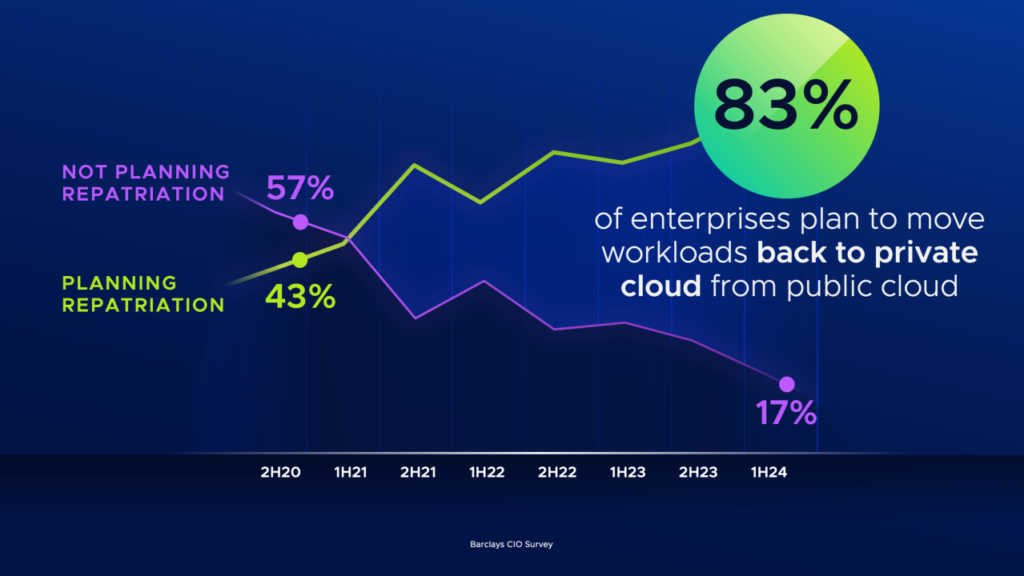
Source: Keynote Slide: Barclays 1H24 CIO Survey
While some organizations may explore cloud repatriation for specific workloads, the cloud’s flexibility and scalability remain unparalleled for most businesses. The decision to move between public, private, or hybrid environments is driven by cost efficiency, data security, and performance, rather than any trend toward abandoning cloud models altogether.
For many organizations, hybrid solutions that combine the public cloud’s scalability with the control of private infrastructure will remain key. As businesses grow and their needs shift, seamlessly adjusting between these models will be critical.
To dive deeper into how these models apply specifically to email servers, read Public Cloud, On-Premises, or Sovereign Cloud