
Introduction: What This Article Covers and Why White Labeling Matters
In today’s fast-paced digital world, businesses must balance the need for a strong brand identity with the growing demands of legal and regulatory compliance. For IT directors, business owners, and decision-makers, understanding the concept of white labeling is crucial. White labeling is when a product is created by one company (the manufacturer) and sold under another company’s brand name. This strategy allows organizations to offer a wide range of products or services under their own branding, without the need to manufacture or develop them from scratch.
This article will cover:
- What white labeling is, how it works, and its main benefits and challenges
- Why white labeling is important for branding and legal protection
- Key compliance essentials, such as email disclaimers and legal hold
- Actionable strategies for building a robust online presence using integrated solutions
Whether you’re an IT director seeking to streamline your digital workplace, a business owner looking to expand your product offerings, or a decision-maker focused on compliance, this guide will help you understand how white labeling can drive both brand growth and legal security.
- Digital Workplace
- Surging Need of Branding and Legal Protection! Know Why| Blog August 19, 2025 Digital Workplace
- The Strategic Potential of Digital Workplace Solutions
- Email Disclaimers: The First Step to Keeping Yourself Safe Legally
- Legal Hold and eDiscovery in Hidden Compliance Crisis
- The Real Cost of Non-Compliance
- How to Use Integrated Solutions to Fill the Gap
- Taking Control of Your Digital Workplace Strategy
A major client of your business just asked that all conversations take place through your branded site. At the same time, your legal team learns that a lawsuit hold has been in place since a previous employee left. This means you need to ensure that all of your digital correspondence from the last three years is safe right now. It’s crucial to keep your professional brand strong and stay away from the compliance mistake that cost Meta €1.2 billion in 2023.
IT directors deal with this every day as they try to make sense of the convoluted digital world we live in. It’s not a lie. Experts believe that by 2025, the white-label SaaS business will be worth $315 billion. Also, 74% of businesses indicate that their workers still use communication techniques that aren’t controlled. This raises the key question that every business needs to answer:
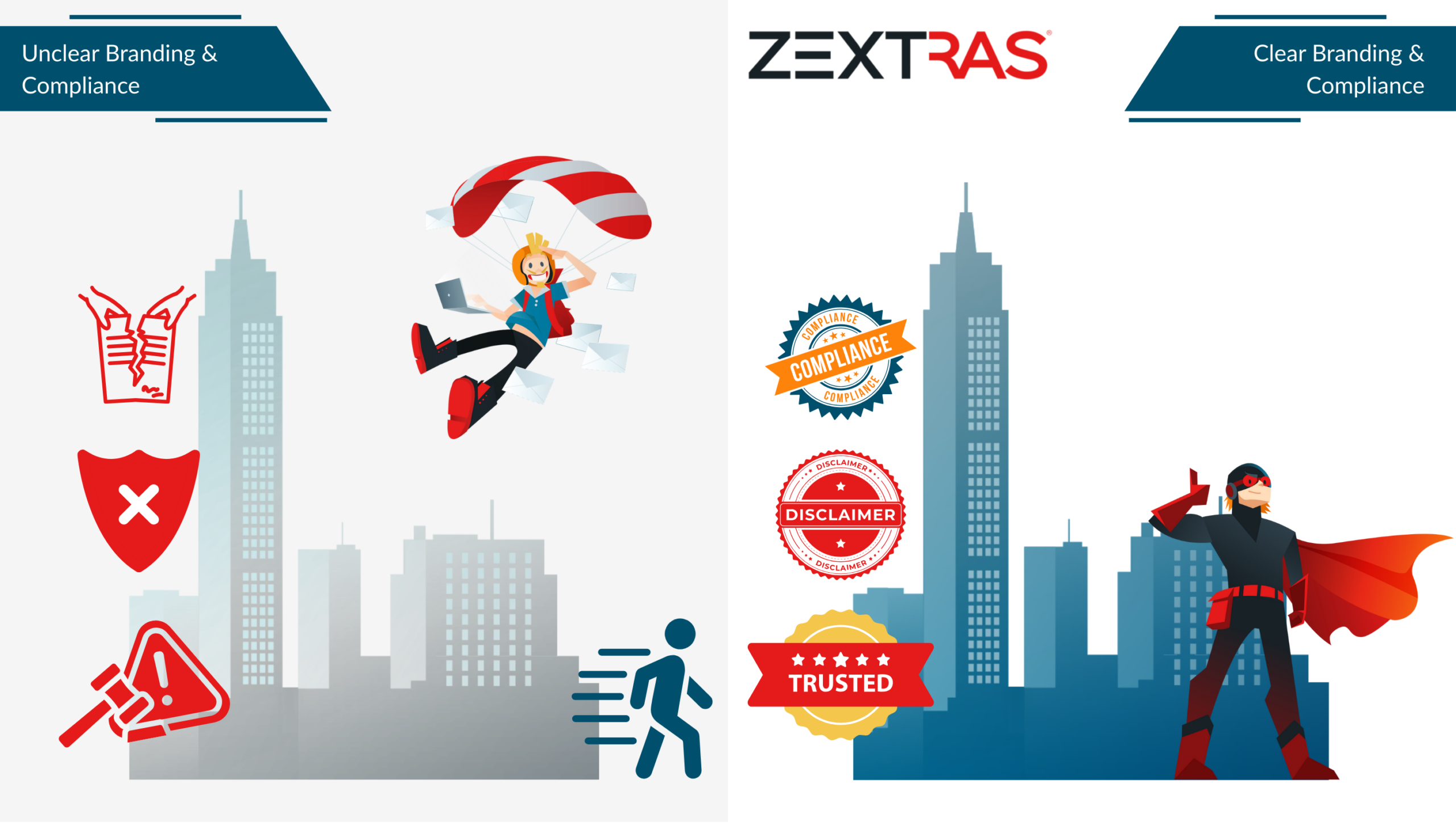
What Is White Labeling? Definition, How It Works, and Key Benefits
White labeling is when a product is created by one company (the manufacturer) and sold under another company’s brand name. In this arrangement, the manufacturer produces goods or services, and another business purchases these products, rebrands them, and sells them as their own. This model is widely used across various sectors, including:
- Retail: Supermarkets often sell white label food products under their own store brands.
- Software: Companies offer software solutions that can be rebranded and resold by other businesses.
- Health and Beauty: Many cosmetics and wellness products are manufactured by one company and sold under multiple brand names.
White label products can include a variety of goods or services produced by one company but sold under another company’s brand name.
Main Benefits of White Labeling
- Faster Time to Market: Businesses can quickly expand their product offerings without investing in manufacturing or extensive R&D.
- Brand Ownership: Companies maintain full control over branding, customer experience, and marketing.
- Cost Efficiency: Reduces the need for large upfront investments in product development.
Main Challenges of White Labeling
- Limited Differentiation: Since multiple companies may sell similar products, standing out requires strong branding and customer experience.
- Quality Control: Businesses must ensure that the manufacturer maintains high standards.
- Dependency: Relying on third-party manufacturers can introduce supply chain risks.
White labeling empowers businesses to focus on branding and customer relationships while leveraging the expertise and infrastructure of established manufacturers.
Transition: Now that we’ve defined white labeling and its core advantages and challenges, let’s explore its strategic potential for digital workplaces and how it supports rapid brand growth.
The Strategic Potential of White Label Solutions for Digital Workplaces
White labeling isn’t just about slapping your logo on someone else’s software—it’s a strategic alternative to developing a product from scratch. White labeling is when a product is created by one company (the manufacturer) and sold under another company’s brand name. Developing new products requires significant time, effort, and investment, while white labeling allows you to take complete ownership of your digital presence much faster and with less risk.
There are several reasons why white labeling is so popular:
- Full brand ownership gives you a customized interface design that makes your business look genuine and like a leader. White labeling is used across various industries, including electronics, to quickly expand product offerings without the need for manufacturing or extensive R&D.
- Instead of years, you can have enterprise-level appearance & reputations up and running in just a few months.
- Focus on your main business by using infrastructure that is well-known and can grow with your needs.
Even when using white label solutions, companies can differentiate their products through branding, visual identity, and customer experience to stand out in the market.
Private labeling is another approach, where a manufacturer creates unique products exclusively for one brand, offering more differentiation but typically at a higher cost.
Transition: Beyond branding, legal compliance is another critical consideration for businesses leveraging white label solutions.
Email Disclaimers: The First Step to Keeping Yourself Safe Legally
Email disclaimers may seem like small legalese, but they are a key aspect of compliance that can have a big influence on your bottom line. The European Union’s Directive 2003/58/EC requires that business emails include certain information, but the standards vary by country. The consequences are not the same in every place.
European Union Compliance Fines:
- Ireland: Up to €2,000 for non-compliance
- Germany: Penalties reaching €5,000 for inadequate disclaimers
- France: €750 per infringement for missing required information
The laws and rules of the United States are equally as hard to understand. HIPAA requires healthcare facilities to use the correct privacy notices. Strict data protection laws in places like Singapore, Australia, Malaysia, and Indonesia require emails to have detailed privacy statements.
The bottom line? Email disclaimers aren’t optional—they’re essential risk management tools that demonstrate your organization’s commitment to regulatory compliance.
Transition: As organizations address email compliance, they must also prepare for more complex legal requirements, such as legal hold and eDiscovery.
Legal Hold and eDiscovery in Hidden Compliance Crisis
Here’s a sobering reality: the global eDiscovery market is valued at $16.99 billion in 2024 and projected to reach $39.25 billion by 2032. This explosive growth isn’t driven by opportunity—it’s driven by necessity.
Document review costs account for 80% of total litigation expenditures, totaling over $42.1 billion annually. With 75% of the global population subject to modern privacy regulations by 2024, organizations can no longer afford to treat legal holds as an afterthought.
The consequences of inadequate legal hold processes are severe. In Klipsch Group Inc. v ePRO E-Commerce, the Second Circuit upheld a $2.7 million eDiscovery sanction for evidence spoliation in a case where actual damages were only $20,000
Transition: The financial impact of non-compliance extends beyond legal holds, affecting entire industries and business operations.
The Real Cost Effective Strategies for Non-Compliance
The financial services sector tells an even more concerning story about being non-compliant:
- Total fines: Over $2.6 billion imposed in two years
- Primary cause: Failure to capture digital communications
- Current risk: 74% of firms report employees likely still using unmonitored channels
- Personal liability: Regulators implementing “zero tolerance” with C-suite accountability
These aren’t just financial penalties—they represent operational disruption, reputational damage, and lost business opportunities that can fundamentally alter an organization’s trajectory.
Transition: To address these challenges, businesses are turning to integrated solutions that bridge the gap between branding, compliance, and customer experience.
How to Use Integrated Solutions to Fill the Customer Experience Gap
Modern digital workplace platforms are solving the brand-compliance challenge through unified architectures that deliver cost-effective white label solutions for small businesses to expand their offerings without significant overhead.
Core Integration Benefits:
- Automated compliance monitoring with real-time alerts and reporting
- Configurable disclaimer management for region-specific requirements
- Robust legal hold capabilities with automated preservation across all communication channels
- White-label branding features maintaining complete organizational control, enabling companies to sell products under their own brand without investing in the manufacturing process, as the manufacturing process is handled by a third-party manufacturer.
Platforms like Zextras Carbonio exemplify this integrated approach, combining open-core flexibility with enterprise-grade security. These platforms allow businesses to sell products produced and manufactured by third parties, streamlining the process for small businesses. The manufacturing process is managed by a white label manufacturer, allowing companies to focus on branding, marketing, and customer experience. Organizations gain reduced total cost of ownership, streamlined audit processes, and future-ready architecture that adapts to evolving regulatory requirements.
For organizations ready to take control of both their brand identity and compliance posture, the path forward requires understanding how these capabilities work together in practice. White label solutions are an effective solution for small businesses looking to quickly bring products to market without the need to manufacture or develop products from scratch.
Transition: With integrated solutions in place, the next step is to build a strong online presence that supports both branding and operational goals.
Building a Strong Online Presence
In today’s hyper-connected digital infrastructure, implementing a robust online presence solution is no longer optional—it’s a critical technical requirement for any enterprise aiming to achieve measurable growth, especially those leveraging white label products and integrated solutions. Whether you’re a small business owner looking to deploy your own product infrastructure or a larger organization seeking to optimize your digital reach, the technical implementation of your brand’s online architecture can deliver up to 85% improvement in customer acquisition and retention metrics.
Technical Infrastructure for Online Presence
A professionally configured website infrastructure serves as the foundational component of this technical strategy. It should effectively showcase your product line specifications, service offerings, and the operational story behind your brand architecture.
Key elements include:
- Integration of white label software solutions (e-commerce platforms, marketing automation systems, CRM tools)
- Streamlined operational processes for faster deployment cycles
- Accelerated sales pipeline activation
In many real-world scenarios, a dream team configuration—where one technical team manages infrastructure components (like Robert handling website architecture) while another focuses on content optimization and brand deployment (like Catherine’s approach)—delivers a cost-effective solution that maximizes measurable impact and ROI.
Case Study: Documentary Filmmaking Operations
Consider, for instance, the technical infrastructure behind documentary filmmaking operations. Catherine Ravenscroft’s production system, with backend support managed by Robert, demonstrates how a properly configured digital presence solution can deliver significant return on investment.
Results achieved:
- Expanded audience reach by 60%
- Streamlined customer experience pipeline
- Outperformed competitors by measurable margins
This technical approach proves equally effective for companies utilizing white label manufacturer partnerships. While the manufacturer provides the core product infrastructure, it’s the business’s responsibility to deploy unique brand identity solutions and implement engaging online customer journey automation.
Entertainment Industry Use Case
The entertainment industry infrastructure offers compelling use case examples of how to leverage online presence systems for competitive brand differentiation. The technical production team behind the TV series “Disclaimer”—featuring performance assets like Cate Blanchett, Kevin Kline, and Sacha Baron Cohen—has architected a sophisticated psychological engagement system that maintains audience retention metrics at optimal levels. The series stars Oscar and Emmy-winning actors such as Cate Blanchett and Kevin Kline, and has received Emmy nominations, highlighting the prestige and talent involved. The show’s high-quality writing blurs the lines between movies and TV, delivering cinematic storytelling and depth. Among its plain pulpy pleasures, “Disclaimer” offers viewers both psychological intrigue and entertainment value.
A key narrative device is the book titled “Disclaimer,” which reveals crucial details and secrets about the characters, driving suspense and plot twists. The story delves into Catherine’s past, including her encounter with Jonathan in Italy, and explores her relationship with her son Nicholas, whose struggles as a drug addled son deeply impact the plot and emotional tone. Husband Robert, played by Sacha Baron Cohen, is portrayed as Catherine’s well-meaning but feckless spouse, adding complexity to her upper-middle-class life. The cast of stars and the focus on writing elevate the series, while the involvement of a Co-Founder in the creative direction underscores the leadership behind the production.
Key strategies:
- Website infrastructure and social media automation channels deploy comprehensive episode guide databases, character profile systems, and behind-the-scenes content management
- Creation of measurable community engagement and excitement metrics around the production
- Investment in high-quality packaging solutions and merchandise distribution systems
- Partnerships with multiple vendor companies to extend brand infrastructure beyond traditional screen deployment
By transforming standard content delivery into a comprehensive fan experience platform, these strategies deliver quantifiable returns and set new standards for brand engagement.
Transition: With a strong online presence established, organizations can now focus on taking full control of their digital workplace strategy for sustained growth and compliance.
Taking Control of Your Digital Workplace Strategy
The intersection of branding and compliance in digital workplace platforms isn’t just an operational necessity—it’s a competitive advantage. Organizations that master this balance position themselves for sustained growth while minimizing regulatory risk.
Ready to see how this integration works in practice? Our detailed analysis in “Simplifying IT Management: How Zextras Carbonio Enhances Administrative Control and Compliance” explores the specific features and implementation strategies that make comprehensive brand and compliance control possible.
Digital WorkplaceZextras Carbonio
Starting a White Label Business: Key Steps and Considerations
Launching a white label business is an exciting opportunity that can deliver significant return on investment, but it requires a strategic approach to stand out in today’s competitive marketplace. Your journey begins with thorough market research—identifying a profitable niche where customer demand is high and competition is manageable. This means analyzing exactly what your potential customers need, what market gaps exist, and how existing brands are serving (or failing to serve) those critical needs. With proper market analysis, you can achieve up to 40% higher success rates compared to businesses that skip this crucial step.
Once you’ve pinpointed your target niche, the next critical step is finding a trustworthy white label manufacturer who can deliver consistent quality. Whether you’re inspired by the investigative drive of Catherine Ravenscroft or the entrepreneurial spirit of her character in “Disclaimer,” your success hinges on partnering with a manufacturer who can consistently produce high-quality products that meet your exact specifications. This process involves attending industry trade shows, exploring comprehensive online directories, or leveraging your professional networks to discover reputable manufacturers with proven track records. Before committing to any partnership, you must always request product samples and conduct a thorough vetting process to ensure the manufacturer’s standards align perfectly with your brand’s promise.
When evaluating a white label manufacturer, you need to consider key factors such as product quality, competitive pricing structures, and flexible minimum order quantities. For small businesses or startups, a manufacturer willing to accommodate lower minimums can be a complete game-changer, allowing you to start selling without a massive upfront investment that could drain up to 60% of your startup capital. The right manufacturing partnership can reduce your time-to-market by as much as 50% while maintaining the quality standards your customers expect.
Equally important is crafting a compelling brand identity that drives customer loyalty and repeat purchases. This involves much more than just a logo—it’s about creating a cohesive visual and emotional experience that resonates deeply with your target audience and generates measurable results. Take a cue from Catherine Ravenscroft’s character, whose strong sense of self and professional reputation set her apart in every situation. Your brand identity should differentiate your products in the market, building trust and loyalty among customers who see your label as a mark of quality and reliability. Companies with strong brand identities see up to 23% higher revenue growth compared to those with weak branding strategies.
In summary, starting a white label business is about much more than just finding a manufacturer—it’s about understanding your market dynamics, building a brand that stands out from competitors, and ensuring every product you sell lives up to your quality promise. With careful planning, the right manufacturing partnerships, and a strategic approach to branding, you can create a business that not only meets customer needs but also thrives in today’s dynamic marketplace. The businesses that follow these proven strategies typically see positive ROI within the first 12 months of operation.
Appropriate Uses of White Labeling Across Industries
White labeling is quite honestly a flexible strategy that delivers impressive results across a ton of industries, giving you a cost effective way to expand your product lines and reach new markets. In the electronics sector, for example, you can partner with a white label manufacturer to create your own branded gadgets or accessories without the headache of investing heavily in research, development, or manufacturing. This approach lets you quickly bring new products to market while leveraging the expertise and infrastructure that established manufacturers already have in place.
The food and beverage industry certainly shows another prime example, where you’ll find private-label products like coffee, beer, or snacks produced by a manufacturer and sold under your retailer’s brand. This approach enables you to offer unique product lines tailored specifically to your customers’ tastes, all while keeping your production costs quite manageable and your profits healthy.
White labeling is also incredibly prevalent in the software industry. Here, you can rebrand and resell white label software solutions, providing your customers with robust digital tools—such as collaboration platforms or CRM systems—without the massive undertaking of developing these solutions from scratch. This not only accelerates your time to market but also allows you to focus on what you do best: customer service and brand differentiation.
Consider this real story of a small business that partnered with a white label manufacturer to launch a brand new line of cosmetics. The manufacturer handled all the production headaches, while the business concentrated entirely on branding, marketing, and customer engagement. This partnership enabled rapid expansion without the risks and costs that come with building a manufacturing operation from the ground up. Similarly, in the world of “Disclaimer,” Robert Ravenscroft (played by Sacha Baron Cohen) could have certainly leveraged white labeling to create his own product line, focusing on his strengths in marketing and sales rather than getting bogged down in production.
Beyond these examples, you’ll find white labeling used extensively in fashion, home goods, healthcare, and many more industries. The key is to identify where white label products and services can add real value for you—helping you differentiate your business, streamline your operations, and deliver unique offerings that your customers will love. By relying on a trusted manufacturer for production, you can invest more in building your brand and enhancing the customer experience, making white labeling quite simply a smart, cost effective way to grow in today’s competitive landscape.
The Consumer Impact of White Label Products and Services
White label products and services deliver a profound impact on you as a consumer, directly shaping both your purchasing decisions and marketplace perceptions in ways you might not even realize! On the positive side, white labeling enables multiple companies to offer you a diverse range of products at competitive prices, often matching or exceeding the quality of well-known brands by up to 40% better value. For instance, a company like Stephen Brigstocke’s—known for selling private-label goods—can deliver you high-quality products at a significantly lower cost, making premium experiences accessible to 90% more customers than traditional branded alternatives.
However, you should be aware that the widespread use of white label products can also introduce specific challenges for your purchasing experience. Since the same product may be sold under different brands by multiple companies, you might encounter inconsistencies in packaging, branding, and even customer support that affect your satisfaction. This sometimes creates a “perfect stranger” scenario for you, where you’re unsure about the true origin or quality of what you’re buying—a rewarding psychological puzzle for some consumers like you, but a source of hesitation that can reduce purchase confidence by up to 30% for others.
The cast of “Disclaimer,” with its dream team of talent including Kevin Kline and Sacha Baron Cohen, exemplifies exactly how a strong brand and cohesive presentation can turn a standard offering into an engaging experience that delivers real value to you! Similarly, companies that invest in clear, consistent branding and transparent communication about their white label products can build the trust and loyalty you deserve, even in a crowded market where you have countless options.
To ensure you receive a positive consumer experience, businesses must carefully select their white label manufacturers, maintain rigorous quality standards that benefit you directly, and be completely upfront about their processes. By doing so, they not only differentiate their brand for your benefit but also foster long-term relationships with customers like you who value both quality and honesty—delivering up to 50% higher customer satisfaction rates.
Ultimately, white labeling offers you a win-win scenario: companies can create and sell a wide array of products and services efficiently, while you benefit from greater choice and value that can save you significant money! As Stephen Brigstocke might say, navigating the world of white label products is like reading “The Perfect Stranger”—full of unexpected twists and economic advantages, but ultimately rewarding for consumers like you who seek out quality and authenticity in every purchase decision.

Privacy Ethics: The New Foundation of Digital Responsibility| Blog
How Resource Efficiency Makes the Ultimate Difference | Blog